How to Choose the Right Impact Socket
Impact sockets are built for the shock loads created by impact tools. The right choice comes down to drive size, socket size, access, material, and the amount of torque the job demands.
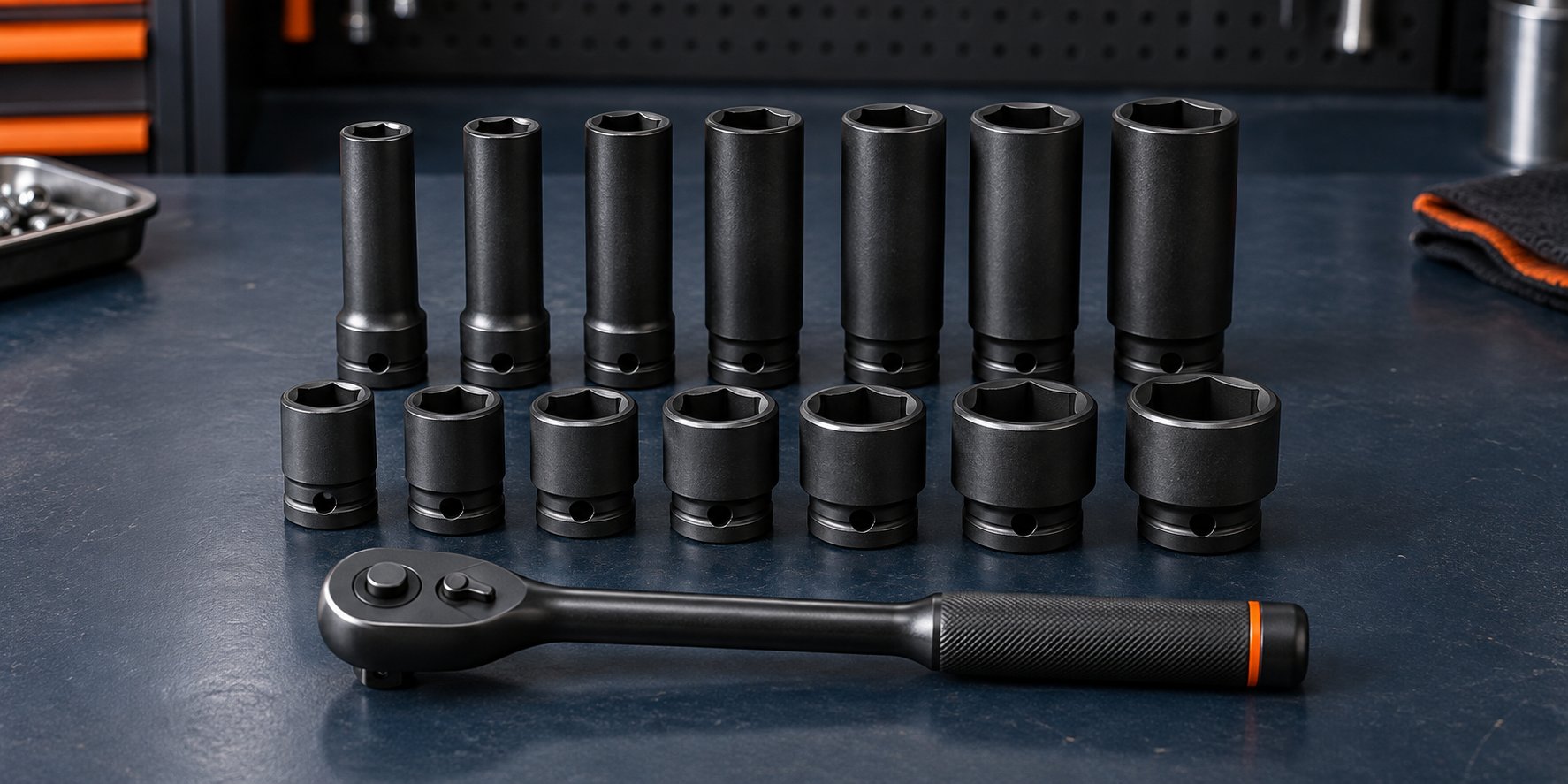
For a general-purpose impact socket setup, this 14-piece set is worth checking out.
Shop impact socket sets on AmazonWhat matters
- Use impact-rated sockets with impact tools.
- Match the socket drive to the tool and required torque.
- Choose six-point sockets when grip on a stubborn fastener matters.
- Check clearance before choosing deep, shallow, or thin-wall designs.
Impact socket basics
Impact sockets are usually made from chrome-molybdenum steel and are built to flex slightly under repeated impact loads. A hand socket may fit an impact wrench, but it is not designed for that shock loading. Use an impact-rated socket whenever an impact tool is involved.
Choose the right drive, depth, and point count
A 3/8-inch drive is useful for general repair work; a 1/2-inch drive is common for larger fasteners and higher-torque jobs. Choose a shallow socket when clearance is tight and a deep socket when the fastener sits on a long stud. Six-point sockets contact more of the fastener flats than twelve-point designs and are often the safer choice for rusty or tight fasteners.
Common mistakes to avoid
- Do not use a cracked, rounded, or visibly worn socket on an impact tool.
- Do not add a cheater bar to an impact extension or universal joint.
- Use an impact-rated extension, adapter, and retaining pin or ring when your tool requires one.
- Stop if the socket begins to slip—moving up to the correct size is safer than forcing it.
Before you buy
Think about the actual job first: fastener size, access, torque, environment, frequency of use, and compatibility with the tool you already own. A product that looks impressive on a product page can still be the wrong tool for the job.
Coming next
We'll add specific product comparisons and buying guides here as the site grows. Product links will be clearly identified when affiliate relationships are active.
Related tool guides
Continue with a closely related topic before choosing your next tool.